Founder-Led Sales: Why Your First CRM Should Be a Spreadsheet
You can close your first million in revenue without a dedicated CRM. A simple stack built on a spreadsheet, a calendar, and an email client prioritizes learning over process for founders.
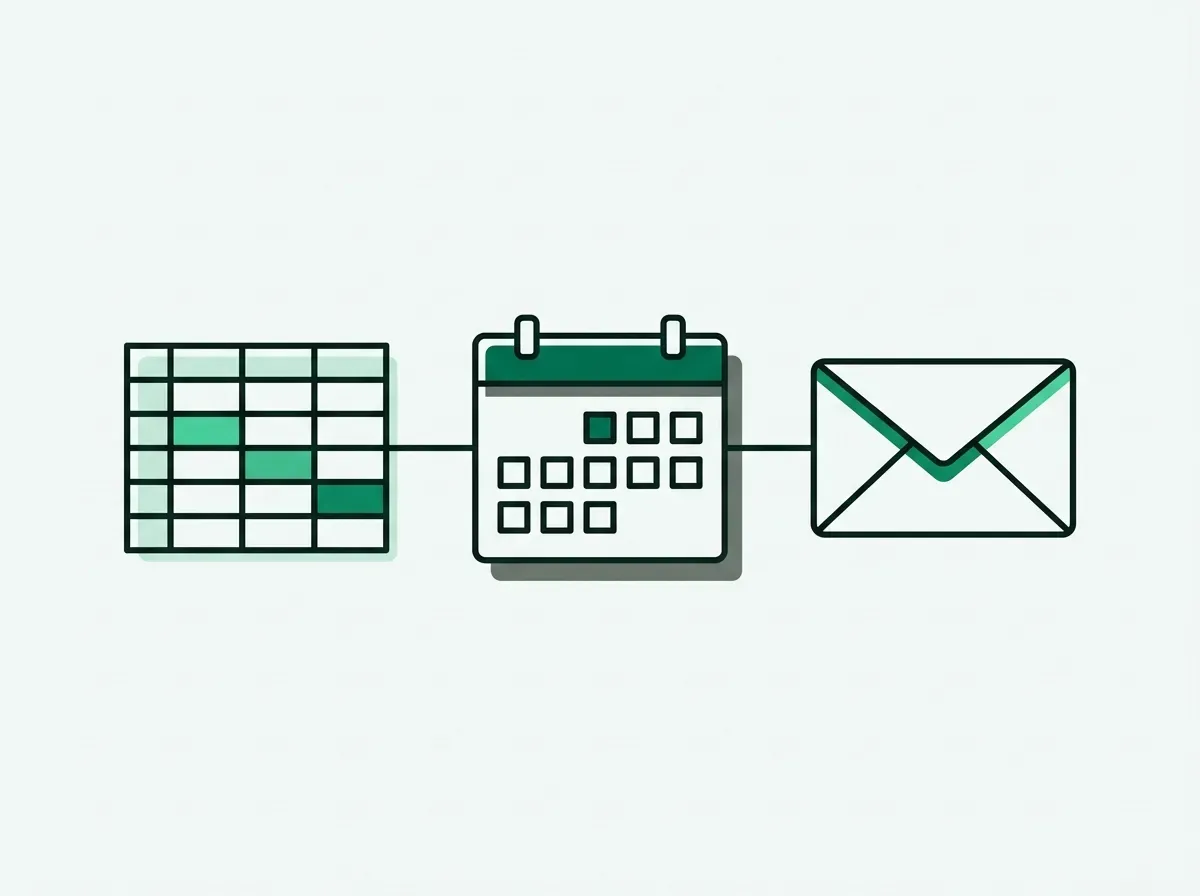
You can close your first million in revenue without a dedicated CRM. A simple stack built on a spreadsheet, a calendar, and an email client prioritizes speed and learning over process. For a founder selling before their first sales hire, this is a feature, not a bug.
The primary goal of founder-led sales is not process optimization. It is learning. You are discovering who your customer is, what problem you solve for them, and how to articulate that value. Over-investing in complex tooling at this stage creates friction, adds administrative overhead, and distracts from the most important task: talking to potential customers.
A heavy CRM forces a rigid process on a sales motion that is still in discovery. Committing to a tool like Salesforce or HubSpot too early is not just a financial cost; it’s a procedural one. A standard HubSpot Sales Hub setup can take two to eight weeks and includes a mandatory $1,500 onboarding fee. A more complex implementation can take months. Worse, industry-wide CRM implementation failure rates range from 30% to 70%, with many failures attributed to human factors like poor adoption, not technology issues. Forcing a tool onto a process that doesn't exist yet is a common path to failure.
The Core Stack: Spreadsheet, Calendar, Email
Your initial sales stack should be built from tools you already use. The goal is to minimize administrative time and maximize selling time.
1. The Spreadsheet: Your Single Source of Truth
Use Google Sheets or Airtable as your pipeline. This is where you will track every opportunity from first contact to close. While many founders start this way anecdotally, Pieter Levels famously validated and launched Nomad List from a public Google Sheet. In an interview with Indie Hackers, he detailed how this minimalist approach allowed him to build a business that now generates millions in revenue. Your spreadsheet should contain these essential columns:
- Company Name: The target organization.
- Contact: The name and title of your point person.
- Last Contact Date: When you last had a meaningful interaction.
- Next Step: The single next action required to move the deal forward.
- Follow-up Date: The date for your next action.
- Deal Stage: A simple progression (e.g., Prospecting, Qualified, Demo, Proposal, Closed).
- Potential Value (ARR): The estimated annual recurring revenue if the deal closes.
- Notes: Key context from conversations.
2. The Calendar: Your Commitment Engine
Use Google Calendar or a similar tool for all demos and follow-ups. Every 'Next Step' in your spreadsheet that has a date must have a corresponding calendar event or reminder. A scheduling tool like Calendly removes the friction of booking meetings, which is your highest-value conversion event at this stage.
3. The Email Client: Your Communication Hub
Leverage your existing email client, like Gmail or Superhuman. Use features like templates or snippets for common messages (e.g., post-demo follow-ups) to save time, but ensure every initial outreach is personalized. The goal is not volume; it is learning from each conversation.
Tools to Avoid in the Early Days
Adding tools before you have a proven, repeatable sales motion is a premature optimization. We recommend avoiding these categories until you have clear signals you need them.
- Dedicated CRMs (Salesforce, HubSpot): These are built for managing teams and scaling proven processes. The setup cost and complexity are unnecessary when you have fewer than 50 active deals.
- Sales Engagement Platforms (Outreach, SalesLoft): These tools automate outreach sequences. This is counterproductive when your primary goal is to learn from manual, personalized conversations. Automating a broken message just gets you to 'no' faster.
- Advanced Analytics Tools: Tracking email open rates and link clicks provides low-signal data. The only metrics that matter at this stage are replies and meetings booked.
Three Signals It's Time for a Real CRM
A minimal stack is designed to be outgrown. You should upgrade your tooling when the spreadsheet becomes a clear bottleneck, not before. Watch for these three signals.

1. The Handoff Problem
You hire your first salesperson. At this point, context can no longer live in your head and a simple spreadsheet. A CRM becomes necessary for collaboration, assigning ownership, and transferring knowledge. The tool is now solving a communication problem, not just a tracking problem.
2. You Are Losing Deals
Sales experts recommend moving to a CRM when managing more than 10 to 20 active leads at a time. If follow-ups are being missed, you can't remember the context of a conversation from two months ago, or deals are going cold because of disorganization, the spreadsheet has failed. The cost of a lost deal now outweighs the cost of implementing a new tool.
3. The Founder Becomes the Bottleneck
You cannot answer basic questions about your pipeline—like its total value or your close rate—without manual calculation. If your personal involvement is the only thing keeping the sales process moving, the business cannot grow beyond what you can personally manage. This single point of failure makes it impossible to onboard new hires, and if you get sick or take a vacation, the pipeline freezes.
From Founder Intuition to a Repeatable System
Adopting a CRM is not a failure of the initial stack, but a necessary step in the company's maturation. The goal of founder-led sales is to create a repeatable process that can be handed off. Once that process is established, it needs a system to support it.
A CRM provides the infrastructure to turn founder intuition into a measurable, scalable operation. It allows for reliable forecasting, smooth hand-offs to new hires, and the systematic growth your business needs. It marks the transition from an operation dependent on one person's memory to a system that enables a team to sell effectively.
Before you scale your tools, scale your learning. When you are ready to find the right customers to build your repeatable process, Drevon can help.